How to Get Commercial Landscaping Contracts
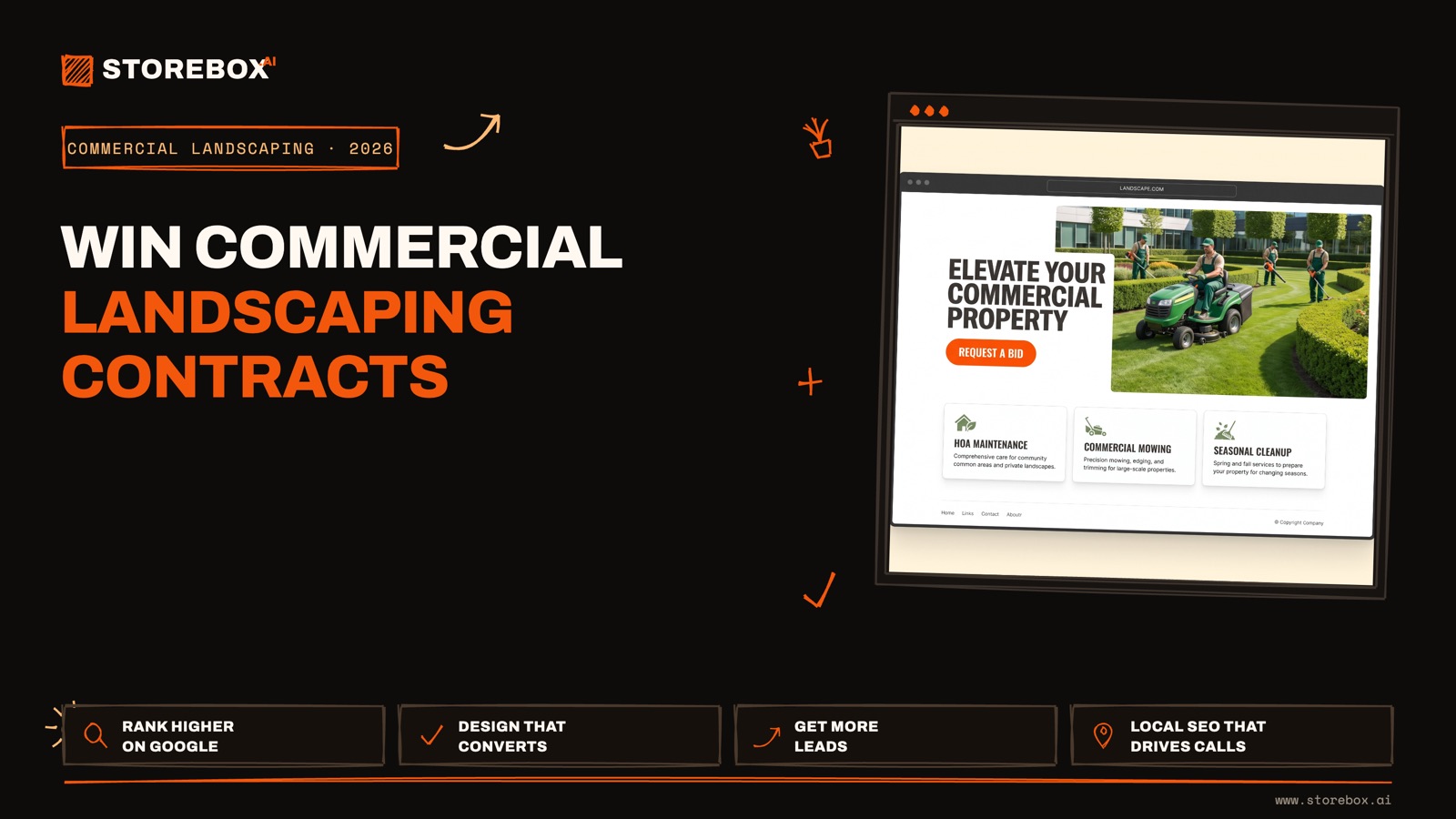
You already know the treadmill. You spend half your week quoting one-off residential jobs — a mulch refresh here, a one-time cleanup there — close maybe one in five, do the work, and then start the whole hunt over again next week. The way off that treadmill is recurring commercial work: HOAs, property managers, office parks, and institutional grounds that sign a contract and pay you every month, all season, for years. So the real question isn't how to find one more lawn — it's how to get commercial landscaping contracts that turn your revenue from a weekly scramble into a predictable base. And here's the part most owners miss: winning that work is less about your mowing and more about whether the decision-maker trusts you before they ever pick up the phone.
Key insights▼
What do landscaping owners actually struggle with most?
We went looking for the real answer instead of guessing. StoreBox analyzed 384 real landscaping and lawn-care business discussions across online communities — owners talking to other owners, not marketing agencies talking at them. The recurring themes were clear, and one towered over the rest:
- Reviews and reputation — ~28% of discussions. The single highest share of any trade we've studied. Owners obsess over their reputation because they've learned it decides who gets hired.
- Turning quotes into booked work — ~9%. The estimate-to-contract gap: lots of bids, not enough signatures.
- Website and being found online — ~8%. "Why can't anyone find me?" and "my site looks like it's from 2009."
- Managing recurring and scheduled work — ~6%. Keeping route-based, repeating jobs organized and renewed.
Read those four themes together and they tell a single story. The work owners want — recurring, scheduled, predictable — is exactly the work they struggle to manage and win. And the thing standing between a bid and a signature is reputation: the #1 theme by a wide margin. That's not a coincidence. Recurring commercial contracts are awarded by people who research you before they ever meet you, and they award them to whoever looks like the safe, credible choice. Win the trust game and the recurring work follows.
Why are recurring commercial contracts worth chasing over one-off residential jobs?
Because the math is not close. A one-time cleanup is revenue once. A commercial maintenance contract is revenue every month, automatically, often for years — and the industry rewards that difference in a way you can take to the bank.
Commercial is also where the money lives. The U.S. landscaping services industry is a $176.7 billion market in 2026 (IBISWorld), and the commercial segment — recurring contracts for HOAs, property managers, hotels, and institutional grounds — is the largest slice of it. Those clients generate higher revenue per service call and the kind of contract income that smooths out the seasonal whiplash that wrecks residential-only shops.
The bigger reason is what recurring work does to your whole business. Maintenance-heavy landscaping companies carry margins of 40%–50%, versus 20%–30% for one-time project work, because scheduling is automated and your crews stay fully utilized. And when it comes time to sell, a landscaper earning 60% of revenue from maintenance contracts commands 5x–5.5x EBITDA, versus 3.2x–3.5x for a project-only shop — a $1 million-plus valuation gap on a $3 million business (Auxo Capital Advisors). Recurring contracts don't just pay you monthly. They make the entire company worth more.
Turn one season into ten. A residential cleanup pays once; an HOA contract pays every month for years. Get the website that makes a property manager pick you. Get a site that books recurring work for $10 →
How do property managers and HOAs actually choose a landscaper?
They run a process, and you almost never see most of it. By the time a property manager or HOA board calls you, they've usually already researched three to five vendors, formed a favorite, and built a shortlist — and they did it without talking to a single one of you.
This is the part that trips up owners who are great at the work. Commercial buyers behave like B2B buyers, not homeowners. B2B buyers spend only about 17% of the entire buying journey in direct contact with any potential supplier — the rest is independent research, comparing vendors, and reading reviews before they ever reach out (Gartner). And the vendor who's already the favorite before that first conversation wins the deal the overwhelming majority of the time. If you're not visible and credible during that silent research phase, you're not in the running — you just don't know it yet.
So what tips that silent research in your favor? When B2B buyers were asked how they decide a vendor is credible and trustworthy, 45% pointed to the company's reputation in the industry — more than any other single factor (Demand Gen Report). On the ground, property-manager hiring guides say the same thing in plainer words: they screen for verifiable references from communities like theirs, proof of insurance and licensing, and signs you'll communicate and report like a real partner, not just a crew that shows up (United Land Services). Reputation isn't a soft factor here. It's the screen you have to pass to even get the bid.
Win the deal before the call. Property managers shortlist you before they ever dial. Make sure what they find looks like the obvious safe choice. Claim your $10 site →
How do you get commercial landscaping contracts?
Stop chasing one lawn at a time and start building the credibility machine that gets you onto shortlists. Landing recurring commercial work comes down to four moves: look like a credible commercial vendor online, stack the reputation signals buyers screen for, turn more of your landscaping bids into signatures, and then keep the contracts you win. Here's how each one works.
How do you build a website that wins commercial landscaping bids?
Your website is the first thing a property manager checks and the cheapest place to lose the bid. The theme data is blunt about this: ~8% of owner discussions are about being invisible or embarrassed online — and a buyer doing silent research will quietly cross you off if your site looks thin or only talks about residential lawns.
A site built to win commercial work needs to speak the buyer's language:
| Page | Job it does |
|---|---|
| Commercial services page (per property type) | Ranks for "commercial lawn care" + "HOA landscaping" searches and proves you do this work, not just backyards |
| Service-area pages (per city/suburb) | Wins "[city] commercial landscaping" — the search a property manager actually runs |
| References / portfolio of commercial sites | Answers the #1 screen: "have they done properties like mine?" |
| Credentials page (license, COI, insurance, bonding) | Clears the procurement checklist before they even ask |
| Reviews wall | Carries the reputation that 45% of buyers use to judge you |
You don't need a developer or a six-week build for this. A platform like StoreBox spins up a structured commercial-landscaping site — service pages, city pages, a credentials section, and a reviews wall — built to rank for the searches property managers run, so you're already on the shortlist when the silent research happens. See the 9 website mistakes that cost small businesses leads ↗ for the full list of what to fix.
Look like the vendor they're already comparing you to. A real commercial site, no developer, live this week. Build your landscaping site for $10 →
How do you stack the reputation signals that win recurring work?
Reputation was the #1 theme for a reason — it's the factor buyers lean on hardest, and it's the one most owners leave to chance. The good news is it's buildable. You don't need to be the biggest landscaper in town; you need to look like the safest choice during research.
- Earn reviews on every finished job, with the place name in them. Recent, specific reviews are both a ranking signal and the thing that calms a nervous HOA board. A wall of "great job at [office park]" reviews does more than any sales pitch.
- Reply to every review, good and bad. It matters more than owners think: 88% of consumers say they'd use a business that responds to all its reviews, versus just 47% for a business that doesn't respond at all (BrightLocal). A thoughtful reply to a complaint can turn a liability into proof you're accountable — exactly what a property manager wants to see before signing a multi-year contract.
- Show the credentials in public. License number, certificate of insurance, bonding, association memberships (BOMA, CAI) — put them on the site. You're pre-clearing the procurement checklist.
- Display commercial references, not just pretty lawns. "We maintain 14 HOA communities and 6 office parks across [metro]" is the line that gets you shortlisted.
StoreBox wires your reviews wall, credentials, and references into the site so they reinforce each other during the silent research phase — the full approach is in local SEO for landscaping companies ↗.
Make your reputation do the selling. Reviews, credentials, and references on one site, working while you're out on the job. Get your $10 landscaping site →
How do you turn more landscaping bids into signed commercial contracts?
Turning quotes into booked work was ~9% of owner discussions — the estimate-to-contract gap is real, and on commercial deals it widens because more people have to say yes. A great number on a sloppy proposal still loses.
Tighten the path from bid to signature:
- Spell out the recurring scope, not just a price. Property managers compare scope, not just dollars. List visit frequency, what's included each visit, and what reporting they'll get. A bid that's 20% under everyone else's reads as "they'll cut corners," not "great deal."
- Lead with references and proof, not your truck. Attach two or three comparable commercial references right in the proposal. You're answering the credibility screen before they have to go looking.
- Make it easy to say yes online. A landing page where a property manager can review your scope, see your reviews, and request the contract beats a PDF lost in an inbox.
- Follow up like the contract is worth six figures over its life — because it is. The deal is often lost to silence, not to a competitor.
How do you keep the commercial contracts you win?
Winning the contract is only half the value. The whole point of recurring revenue is that it recurs — and the cost of replacing a lost contract dwarfs the cost of keeping it. Across industries, acquiring a new customer costs anywhere from 5 to 25 times more than retaining an existing one, and lifting retention just 5% can raise profits 25%–95% (Harvard Business Review, via Optimove).
The best landscaping companies hold a 90%+ contract retention rate year over year — and when contracts are lost, it's usually not for bad work. It's because a client never heard from the company between visits, forgot what was included, or didn't realize the contract was up for renewal (Grow Group). Retention is a communication problem disguised as a service problem. Send the property report. Flag the renewal early. Show up in their inbox before they wonder where you went, and the recurring revenue keeps recurring.
Keep what you win. The cheapest contract to land is the one you already have. Set up the site and reviews engine that keeps clients renewing. Launch yours for $10 →
Frequently asked questions
How do property managers find a commercial landscaper near me?+
What's the difference between commercial lawn care contracts and residential jobs?+
How do I get my first commercial landscaping contract with no commercial experience?+
Where do I find commercial landscaping bids and RFPs to respond to?+
How fast can I realistically get commercial landscaping contracts?+
Build the credibility that lands recurring commercial work
A property manager decides whether you're worth a bid long before they call you — by searching, comparing, and reading reviews while you're out cutting grass. If your online presence doesn't look like a credible commercial vendor in that moment, you never make the shortlist, no matter how good your crews are. StoreBox builds the landscaping website, service-area pages, and reviews wall that rank for "commercial landscaping [your city]" and make you the obvious safe choice — so you trade one-off residential jobs for recurring contracts that bill every month.
Build your StoreBox site — $10Sources
- StoreBox — Analysis of 384 landscaping / lawn-care business discussions (reviews & reputation ~28%, quotes→booked ~9%, website/found-online ~8%, recurring/scheduled work ~6%) — internal original research
- IBISWorld — Landscaping Services in the US — Market Size ($176.7B in 2026; commercial is the largest segment) — https://www.ibisworld.com/united-states/market-size/landscaping-services/1497/
- Auxo Capital Advisors — Landscaping M&A: Recurring Revenue & Route Density (maintenance margins 40–50% vs 20–30%; 60%-maintenance shops at 5x–5.5x EBITDA vs 3.2x–3.5x project-only) — https://auxocapitaladvisors.com/landscaping-outdoor-services-m-a/
- Gartner — The B2B Buying Journey (~17% of buying time spent with any one supplier; mostly self-directed research) — https://www.gartner.com/en/sales/insights/b2b-buying-journey
- Demand Gen Report — Discerning B2B Buyers Rely on Reputation & Peer Reviews (45% cite industry reputation to establish vendor credibility) — https://www.demandgenreport.com/resources/discerning-b2b-buyers-rely-on-vendor-knowledge-in-depth-research-peer-reviews-to-guide-buying-decisions/47802/
- BrightLocal — Local Consumer Review Survey 2024 (88% would use a business that replies to all reviews vs 47% that doesn't) — https://www.brightlocal.com/research/local-consumer-review-survey-2024/
- Optimove (citing Harvard Business Review) — Customer Acquisition vs. Retention Costs (acquisition costs 5–25x retention; +5% retention = +25–95% profit) — https://www.optimove.com/resources/learning-center/customer-acquisition-vs-retention-costs
- Grow Group — How to Get More Landscape Contract Renewals (top shops hold 90%+ retention; losses driven by missed touchpoints, not bad work) — https://www.growgroupinc.com/the-grow-group-blog/how-to-get-more-landscape-contract-renewals
- United Land Services — How to Choose a Commercial Landscaping Company: A Property Manager's Guide (references, COI, reporting are the core screens) — https://unitedlandservices.com/how-to-choose-a-commercial-landscaping-company-a-property-managers-complete-guide/