How to Get More Dental Patients vs Big DSOs
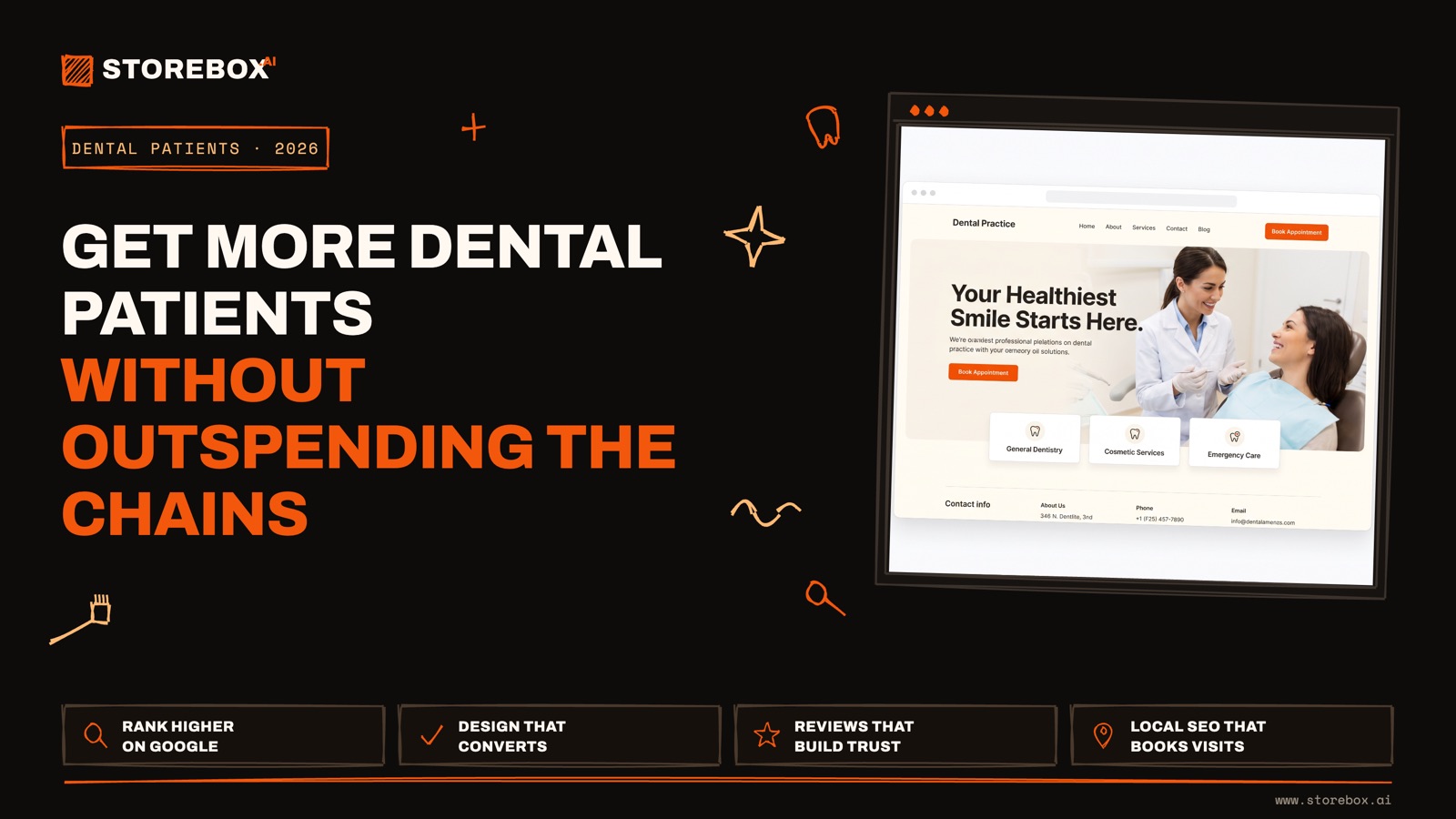
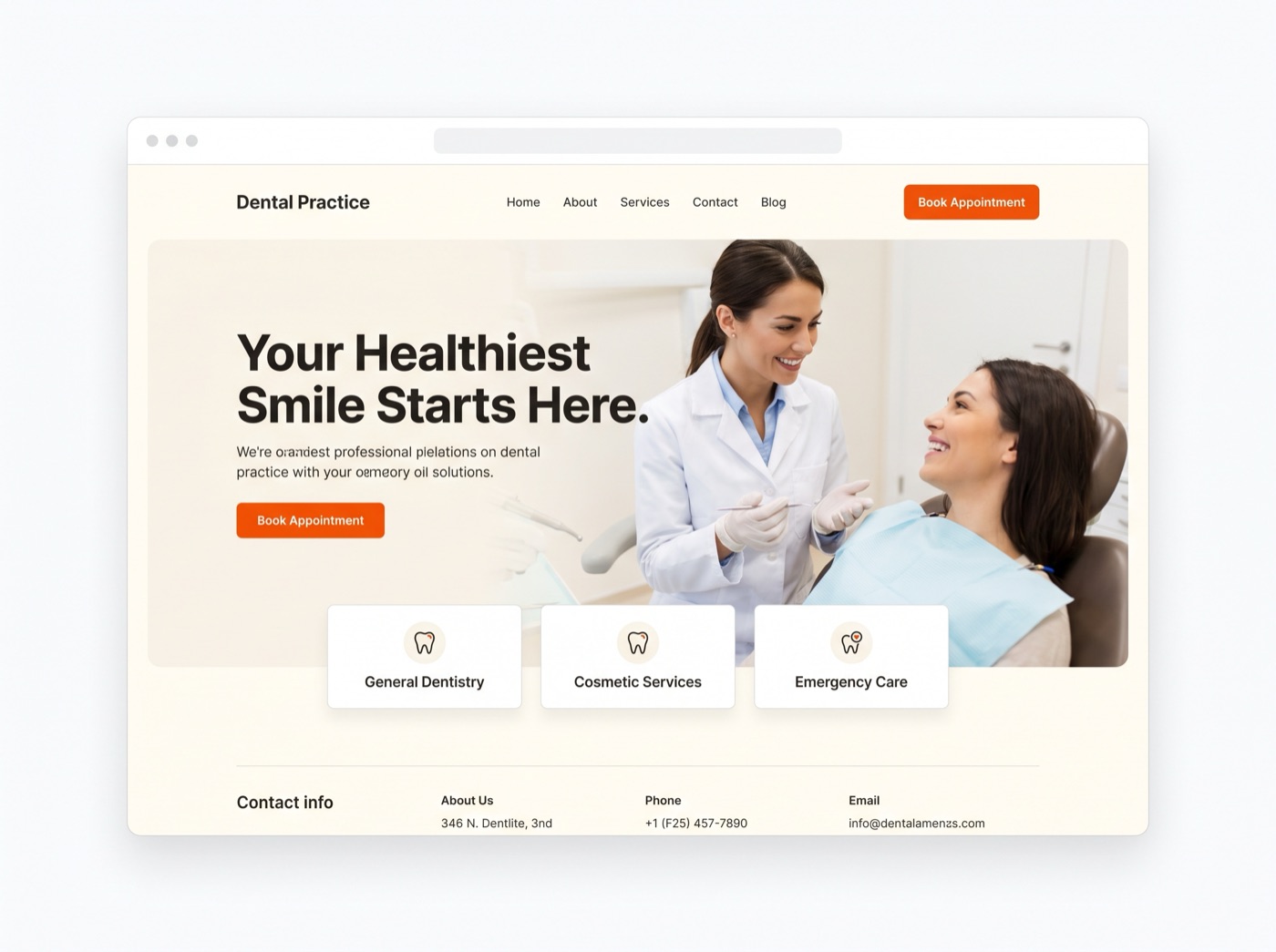
You can feel the math changing. A corporate-backed office opens two miles away, and within a month they've bought the top of Google, the bus-stop ad, and a "$59 new-patient special" that you can't profitably match. Figuring out how to get more dental patients when you're up against that budget feels impossible — but it isn't, and the answer isn't more ad spend. The chain is built to win on volume and dollars. You win on the things a corporate office can't manufacture: trust, real reviews, and showing up first when a neighbor searches. This is the playbook for taking the new-patient calls back.
Key insights▼
Why is a corporate dental chain taking your new patients?
It usually isn't your dentistry, and it isn't your prices. You lose the new patient because the chain got found first — on Google, in the map, and in the reviews — at the exact moment a person decided they needed a dentist. The patient who's been with you twelve years isn't going anywhere. The problem is the person who just moved to town, or whose kid cracked a tooth, who has no relationship with anyone yet and reaches for their phone.
Is the shift to corporate dentistry real, or am I imagining it?
It's real, it's measurable, and it's accelerating. As of 2024, about 16% of U.S. dentists are now affiliated with a dental support organization (DSO) — up from 10.4% in 2019 and 8.8% in 2017 (ADA Health Policy Institute). Among dentists who graduated in the last five years, that figure jumps to 27% (ADA Health Policy Institute) — meaning the next wave of competition is arriving pre-attached to a corporate marketing budget.
Here's the part the headlines miss, and it's the part that should give you confidence: the industry is still yours to win. The U.S. dentists industry runs about $196.1 billion across roughly 180,000 businesses, and it's so fragmented that no single company holds even a 5% market share (IBISWorld). The chains are loud, but they are not dominant. Most patients in your zip code are still choosing a dentist the old way — by searching, reading, and picking who looks trustworthy. The only question is whether they can find you when they look.
Why does the chain get the new patient before I do?
Two reasons, and they feed each other.
First, they buy attention you can't outbid. Dental keywords are expensive — "how to get more dental patients" itself carries a cost-per-click north of $23 — and a DSO with twelve locations can absorb a cost-per-acquisition that would bankrupt a single practice. You can't win the auction. So stop trying to.
Second — and this is the opening — the decision happens in organic search and reviews, not in the ad. Around 90% of people search online before booking a dental appointment (PurpleZ), and "dentist near me" alone draws roughly 673,000 searches a month in the U.S. (PurpleZ). Most of those people scroll past the ad and pick from the map results and the organic listings underneath it. If your practice shows up there with more and better reviews than the chain, you win the click — without paying for it.
Get found before the chain's ad does. When a new neighbor searches "dentist near me," they should land on you — not the office with the bigger budget. Get a website that ranks for $10 →
What's ranking now for "how to get more dental patients" — and why you can beat it?
Here's what we found when we pulled the search results. The page-one content for getting more dental patients is dominated by marketing agencies and DSO-sell-side blogs — Titan Web Agency, Dentplicity, practice-broker sites — all writing some version of "here are 15 ways to grow." Plenty of it is fine. None of it is written by someone telling you, plainly, how to beat a specific, better-funded competitor with the one set of assets you own and they can't fake.
There's also a second, larger cluster: "should I join a DSO or stay independent" content, written for dentists thinking about selling. That's the opposite of what you want. You're not trying to join them — you're trying to out-rank them in your own town.
That's the gap. The "general dental marketing tips" angle is crowded and generic. The "independent practice wins the local new-patient search against a corporate chain" angle — tied to trust, reviews, and the map pack — is wide open. It's also the angle that actually matches how patients choose, which is exactly why it converts. Walk into it.
Own the comparison, not just the keyword. The patient choosing between you and the chain is reading reviews and scanning the map — be the obvious answer there. Claim your $10 site →
How do you get more dental patients as an independent practice?
Stop competing on the chain's turf — the paid auction — and start winning on yours. That means three assets ready before the next patient searches: a website that ranks for the searches people actually run, a Google presence the chain can't fake, and a wall of real local reviews that makes you the obvious safe choice. The corporate office can buy the ad. It can't buy your reputation in this town.
How do you build a dental website that ranks for "dentist near me"?
A logo, a phone number, and a stock photo of a smiling family won't rank, and it won't convert. The patient searching at 9 p.m. with a toothache needs to find a page that answers their exact search. Build for how people actually look for a dentist:
- Make a page for each service, in each area you serve. "Emergency dentist in [your city]," "Invisalign in [your city]," "family dentist in [your suburb]." A page targeting the precise search beats a generic "our services" page every time — and it's how you appear for searches the chain's single corporate template misses.
- Answer the questions patients ask before they call. Do you take their insurance? What does a new-patient visit cost? Can they get in today? Put the answers on the page. You become the practice that already feels helpful before anyone picks up the phone.
- Lead with what makes you the local choice. Same dentist every visit, not a rotating roster. A real person who answers the phone. Years in the same community. That's the contrast that wins, so say it plainly.
This is exactly the gap a purpose-built site closes. A platform like StoreBox spins up the service-and-city pages structured to rank for the searches that bring in new patients — live and indexed, no developer required. See the dental website design guide ↗ for the full checklist. You set it up once and it works while you're chairside.
Which dental website pages turn a searcher into a booked appointment?
Most independent dental sites are missing the pages that actually do the converting. At minimum you need:
| Page | Job it does |
|---|---|
| Service + city pages (emergency, Invisalign, implants, family) | Rank for the exact searches new patients run |
| "New patients" / first-visit page | Answers cost, insurance, and what to expect — the questions that stall a booking |
| Online booking / request-appointment page | Captures the lead at 9 p.m. instead of losing them to voicemail |
| Reviews + before/after page | Proves quality the way the chain's slick stock photos can't |
| About-the-dentist / meet-the-team page | Sells the one thing corporate can't offer: a relationship with a real person |
You don't need to build these by hand — that's the point of a platform like StoreBox, which ships these as a structured template you fill with your own services, your own area, and your own patients. (Want to know what to avoid first? See the 9 website mistakes that cost small businesses leads ↗.)
All your patient-getting pages, no developer. Ready to fill in and go live this week — before the chain runs its next promotion. Build your dental site for $10 →
How does an independent dentist beat a corporate office on Google's map?
Repositioning only works if patients can see you. The local map pack — the three businesses shown with the map — is where the new-patient search is won, and it's where the chain is surprisingly beatable, because a genuinely local profile with a steady stream of recent, local reviews is something a corporate office struggles to keep up across dozens of locations.
The map pack captures roughly 48% of all clicks on a local search, and the businesses inside it get about 126% more traffic and 93% more calls than the listings below it (Search Engine Land). For a dentist, that's the difference between a full new-patient schedule and a quiet one. To get there:
- Complete and work your Google Business Profile. Set the primary category to "Dentist," fill every field — services, hours, insurance, service area — and post real photos of your actual office and team. A complete, active profile is the single biggest lever on whether you land in the 3-pack.
- Ask every happy patient for a review — and answer them all. Recent, local reviews are both a ranking signal and the thing that calms a nervous new patient. The chain can't easily concentrate "[your town]" reviews on one location the way a single, rooted practice can.
- Build a page for every neighborhood and suburb you serve. A family one town over won't find you if your site only names your home base. One area page per community turns "[that town] dentist" into a search you can actually win.
StoreBox builds your site, your area pages, and your Google Business Profile structure together so they reinforce each other and you actually land in the 3-pack — the full approach is in local SEO for dentists ↗.
Own the map before they buy the billboard. Website, city pages, and Google profile, set up together so you rank when a patient is ready to book. Get your $10 dental site →
How do you compete on trust and reviews when you can't outspend the chain?
You can't out-advertise a DSO. You don't have to, because the patient isn't really choosing the bigger ad — they're choosing who to trust with their mouth, and trust is exactly where you have the edge.
The data is overwhelming. Eight in ten Americans say online reviews are the first thing they check when choosing a new dentist, Google is the most-trusted review platform (85% rely on it), and 52% won't even consider a dentist with fewer than 10 reviews (Dentaly). Worse for the careless: 95% say a negative review makes them reconsider (Dentaly). This is your whole opening. A rooted, owner-run practice with a hundred warm, recent, local reviews beats a corporate office with a scattered, indifferent profile — every time a patient compares them side by side.
And the stakes per patient are high enough to make the effort obvious. A typical general-dentistry patient is worth around $4,000 over the seven to eight years they stay, climbing toward $7,000 once they accept elective treatment like whitening or aligners (Wonderist Agency). Every review you earn and every search you win isn't a one-time visit — it's years of care and referrals the chain doesn't get. So make trust impossible to miss: a steady review-request habit after every visit, the dentist's real name and face on the site, your years in the community stated plainly, and a profile that's clearly here, not run from a regional office.
Make your reviews the thing they can't match. The chain buys the ad; you earn the trust — and trust is what books the appointment. Launch your $10 site →
Frequently asked questions
How can an independent dental practice compete with a corporate chain or DSO?+
How much does it cost to get a new dental patient, and is it worth it?+
Do online reviews really affect how many dental patients I get?+
What's the fastest way to grow a dental practice without a huge ad budget?+
How do I find a good dentist near me?+
Stop handing your new patients to the chain
When someone needs a dentist, they reach for their phone before they read a billboard. If they can't find you in that moment — with a site that ranks, a complete Google profile, and a wall of real reviews — the corporate office with the bigger budget wins by default, even though you do the better dentistry. StoreBox builds the dental website that ranks for "[your city] dentist," strengthens your Google presence, and turns the searcher into a booked new patient — so the growth stays with the practice you built.
Build your StoreBox site — $10Sources
- ADA Health Policy Institute — How Big Are Dental Service Organizations (DSOs)? (16% of dentists DSO-affiliated in 2024, up from 10.4% in 2019; 27% among newest dentists) — https://www.ada.org/resources/research/health-policy-institute/dental-practice-research/how-big-are-dental-service-organizations
- IBISWorld — Dentists in the US — Industry Analysis (~$196.1B; ~180,000 businesses; highly fragmented, no firm >5% share) — https://www.ibisworld.com/united-states/industry/dentists/1557/
- Dentaly — 8 Out of 10 Americans Choose Their Dentist Based on Online Reviews (80% check reviews first; Google trusted by 85%; 52% need 10+ reviews; 95% reconsider after a negative review) — https://www.dentaly.org/us/research/dentist-reviews-online/
- Search Engine Land — What Is the Google Local Pack? (3-pack ≈ 48% of clicks; 126% more traffic, 93% more calls) — https://searchengineland.com/guide/google-local-pack
- PurpleZ — Rank #1 with Local SEO for Dentists (2026 Guide) (~90% search online before booking; ~673,000 monthly "dentist near me" searches) — https://purplez.com/rank-1-with-local-seo-for-dentists-2026-guide/
- Wonderist Agency — What's a New Dental Patient Really Worth? (~$4,000 lifetime value, ~$7,000 with elective treatment) — https://www.wonderistagency.com/blog/whats-a-new-dental-patient-really-worth-its-more-than-you-think