Local SEO for Pest Control Companies
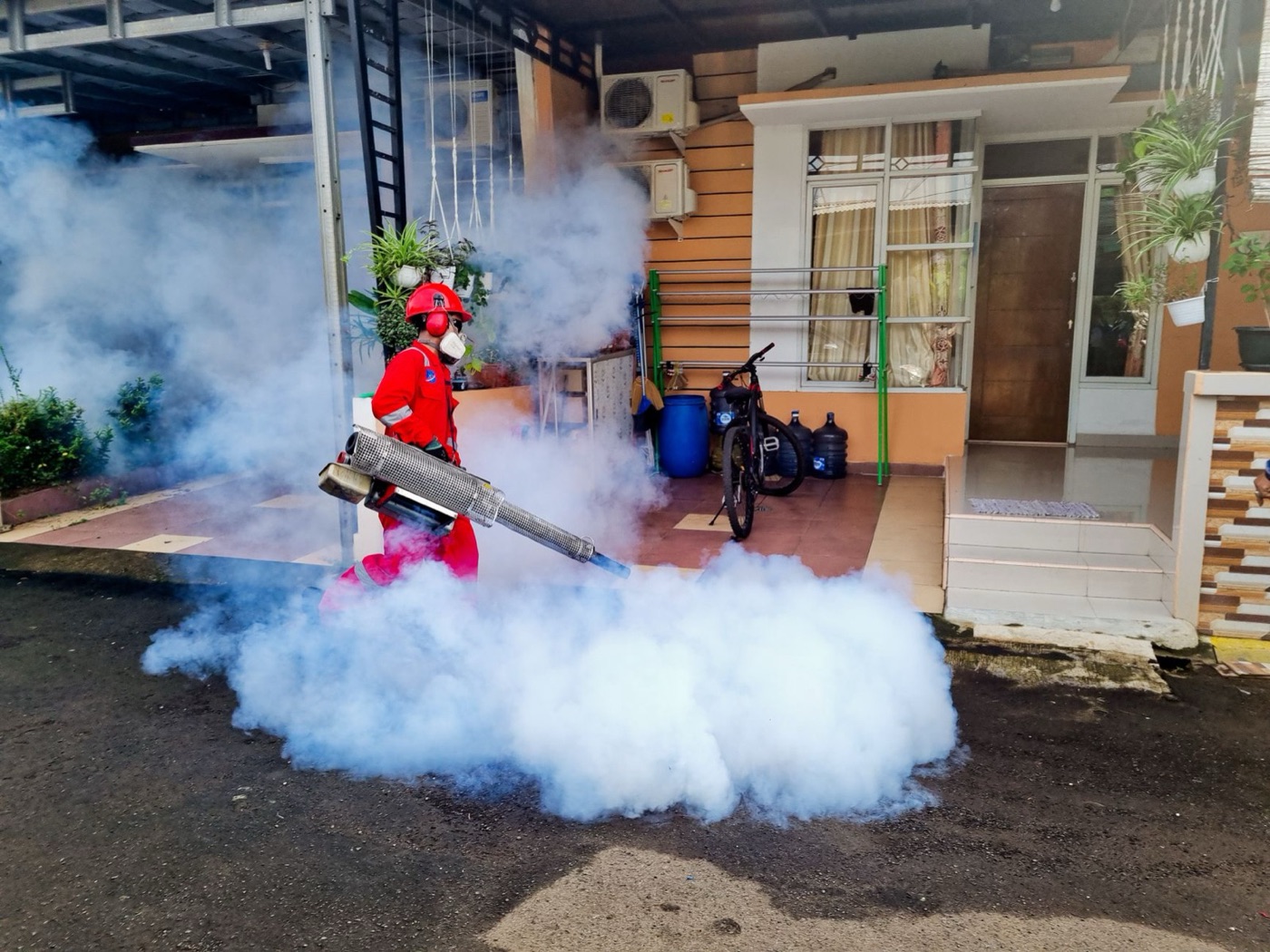
Here's the blunt version: local SEO for pest control companies is not "rank for pest control near me." It's ranking for termite inspection in one suburb, bed bug treatment in another, and rodent exclusion in a third — while your Google Business Profile carries the map pack for all of them. Homeowners don't search for a category. They search for the thing crawling across their kitchen floor at 11pm, and they search it with a city name or a phone that already knows where they are. 42% of local searchers click a result inside the map pack, and roughly 46% of all Google searches have local intent (Backlinko). If you're not in those three slots for the specific pest, you're invisible for the call that would have become a $45-a-month recurring plan.
Key insights▼
- Why is local SEO for pest control companies different from every other trade?
- How do you set up a Google Business Profile that actually ranks?
- Why do pest-type city pages beat one generic pest control page?
- What's ranking now, and how do you beat Terminix and Orkin as an independent?
- How do you build a review engine that moves the local 3-pack?
- What on-page, schema, and NAP work does Google still need from you?
- Frequently asked questions
Why is local SEO for pest control companies different from every other trade?
Three things make pest control unusual. First, demand splits by pest type, not by service category — "termite inspection," "bed bug exterminator" and "mice in the attic" are three different customers with three different price points and three different levels of panic. Second, demand is seasonal per pest, so your ranking work has a calendar attached to it. Third, the money isn't in the one-time call — it's in the recurring plan. Recurring revenue accounted for 85.4% of US residential pest control service revenue in 2025, across roughly 13.29 million residential customers (NPMA). Every ranking you win is a subscription, not a transaction.
Relevance, distance, prominence — and the local 3-pack
Google is explicit about how local results get ordered. Its own help documentation says local results are based mainly on relevance (how well your profile matches the search), distance (how far you are from the searcher) and prominence (how well known you are, including how many sites link to you) (Google Business Profile Help). You can't move a house. You can absolutely move relevance and prominence, and that's the entire job.
Relevance is what you control fastest: the right primary category, the right services listed, and a page on your own site that matches the exact query. Prominence is slower — reviews, citations, links from the local chamber, mentions in the town paper when you handle a wasp nest at the high school. Distance is the constraint you design around by picking which cities you can honestly claim and building real pages for them.
The prize is the 3-pack: the three Business Profiles Google shows above the organic results with a map. That's where the clicks concentrate, and it's why a pest control company with a mediocre website and a great profile often out-earns one with a beautiful website and a neglected profile.
One more piece of context worth knowing: 16,565 pest control firms operated in the US in 2025, and 81.4% of them ran one or two locations, on total industry service revenue of $13.416 billion (NPMA). Most of your competition is a two-truck operation whose website hasn't been touched since 2019. That's a very beatable field.
How do you set up a Google Business Profile that actually ranks?
Start with the primary category, because it does more work than anything else on the profile. BrightLocal's analysis of local pack ranking factors puts the primary Google Business Profile category at the top of the list, weighted at roughly 32% of what determines local pack visibility (BrightLocal). For almost every operator reading this, the correct primary category is Pest Control Service — not "Contractor," not "Home Inspector," not "Business Service." Google's category list changes constantly, so search the field in your dashboard rather than trusting a list you found online (Google Business Profile Help).
Add secondary categories only for work you genuinely perform. If you do wildlife removal, Animal Control Service earns its place. If you don't, leaving it on there dilutes relevance and invites a competitor to report you. Two or three well-chosen secondaries beat eight aspirational ones.
| Profile field | What most pest control profiles do | What to do instead |
|---|---|---|
| Primary category | Something broad like "Contractor" or "Home services" | Pest Control Service — the most specific match, nothing vaguer |
| Secondary categories | Eight categories, half of them aspirational | Two or three you actually service and can prove |
| Address | Home address left public, or a UPS box | Hide the address, set service areas — a real address stays on file for verification |
| Services | Blank, or one entry called "Pest control" | One entry per pest: termite, bed bug, cockroach, rodent, mosquito, ant |
| Photos | Three stock images of a bug | Trucks, techs in uniform, real treatments, before/after, geotagged nothing — just real |
| Hours | 9-5, no emergency note | Real hours plus a stated after-hours line — profiles open at search time rank better |
| Q&A | Empty or hijacked by a competitor | Seed and answer the ten questions your phone gets every week |
Service-area business setup, done right
Almost every pest control company is a service-area business: you go to the customer, the customer never comes to you. Google's guidance for that case is direct — hide the business address and define your service areas instead, and if you don't enter a service area Google will pick a local one for you (Google Business Profile Help). Google still requires a real physical address on file for verification even when it's hidden, and PO boxes or virtual offices violate the representation guidelines and get profiles suspended (Google).
Keep service areas honest. Listing 40 cities does not make you rank in 40 cities — distance still applies, and a bloated service area buys you nothing. Pick the ring you can actually reach within your drive-time promise, and build website pages for those cities so relevance backs up the claim. If you're still stuck on the basics of why nothing shows up, why your business isn't showing up on Google walks through the usual culprits.
Your profile needs a website behind it. Google's prominence signal leans on the site your profile links to — get a real one for $10 instead of pointing at a Facebook page. Get your $10 pest control site →
Why do pest-type city pages beat one generic pest control page?
Because relevance is matched query by query. A single page called "Pest Control in Round Rock" is competing for the vaguest, most crowded phrase in the market. Five pages — termite, bed bug, cockroach, rodent, mosquito, each tied to Round Rock — compete for five specific phrases where the searcher already knows what they want and is closer to buying. Specific pages also let you write the thing a national brand can't: what the pest actually does in your soil, your climate, your housing stock.
The education gap here is enormous, and it's yours to fill. Termites cause an estimated $6.8 billion in US property damage annually, standard homeowners policies almost universally exclude that damage, only 58% of homeowners are aware of what termites can do to a building, and just 36% can identify the common signs of an infestation (NPMA). A page that shows a homeowner the mud tubes and the discarded wings, then tells them their insurance won't cover it, converts far better than a page listing "our services."
The five pest pages to build first
- Termites — highest ticket, highest fear, strongest inspection intent. Cover swarm signs, the difference between subterranean and drywood in your region, what an inspection includes, and the insurance exclusion.
- Bed bugs — highest urgency and highest shame. Cover heat vs. chemical treatment, prep instructions, how many visits, and whether you treat multi-family units. People read this page at 2am.
- Cockroaches — highest recurring-plan conversion. Cover German vs. American roaches, why one-off sprays fail, and what your quarterly plan actually does.
- Rodents — cover exclusion work, not just trapping. Entry-point sealing, attic sanitation, and the fall migration indoors. Exclusion is where the margin is.
- Mosquitoes — the easiest seasonal subscription sell. Cover yard treatment cycles, standing-water sources on typical lots in your area, and event treatments.
Then multiply. Five pests across eight cities is 40 pages — enough to own a metro. But do it wrong and you've built 40 near-identical pages that Google treats as thin and ignores. The rule: every page needs at least one thing that could only have been written about that pest in that city. A neighborhood name. A housing type. A local ordinance. A photo from a job you actually did there. If you can swap the city name and the page still reads the same, it's not a page — it's a template, and templates don't rank.
How seasonality decides what you publish and when
Rankings take weeks to mature, which means you publish and build links for a pest page before its season, not during it. Termite swarm season starts in spring, so a termite inspection page should be live and indexed by late winter (Orkin). Work backwards from the calendar:
| Season | Pest that spikes | Publish by |
|---|---|---|
| Spring (Mar-May) | Termite swarmers, ants, carpenter bees | January |
| Summer (Jun-Aug) | Mosquitoes, wasps, bed bugs (travel season) | April |
| Fall (Sep-Nov) | Cockroaches and rodents moving indoors | July |
| Winter (Dec-Feb) | Rodents, overwintering pests, bed bugs | October |
Every one of these pages should route to the same place: the recurring plan. Recurring work is 85.4% of residential revenue in this industry (NPMA), so the page's job isn't "book a spray." It's "book the first visit of a plan." Put the monthly or quarterly price on the page. Owners who hide pricing get tire-kickers; owners who publish it get pre-qualified calls.
Forty pages, one afternoon. A StoreBox site gives you a page template you can clone per pest and per city without paying a developer per page. Start building pest pages →
What's ranking now, and how do you beat Terminix and Orkin as an independent?
Search "termite treatment" plus your city and look at what's actually there. You'll usually find four things: a national franchise location page, two or three directory listings (Yelp, Angi, Thumbtack), a national brand's blog article about termites that isn't local at all, and maybe a Reddit thread. Each of those is beatable, and each is beatable for a different reason.
- Franchise location pages are templates. Orkin runs 400+ locations with more than 8,000 team members (Orkin). At that scale the city page is generated, the phone number routes to a national call center, and nobody writes about the crawlspace conditions in your specific zip code. You can — and Google's relevance signal rewards it.
- Directory listings aren't the provider. A searcher who lands on a directory has to pick from a list. If your profile there is complete and your reviews are strong, the directory becomes a second front door instead of a competitor.
- National blog content has no local intent. A 3,000-word national article about bed bug biology does not answer "how much does bed bug treatment cost in Tempe." A 900-word page with your local price range does.
- Forum threads and Nextdoor posts are weak on prominence. They rank because nothing better exists for that long-tail phrase. Publish the better thing and they drop.
Your structural advantage is that you can be specific and they can't. Real photos of your trucks. The tech's first name. The actual neighborhoods. A phone number that a human in the same time zone answers. Franchise scale wins on ad budget and brand recall; it loses on every signal that requires local knowledge.
And consider the math on the alternative. Home services paid search averaged $7.85 per click and $90.92 per lead in 2025 (LocaliQ). You will not outbid a company with a national media budget. You can out-rank them organically in one metro, because they're optimizing 400 cities at once and you're optimizing eight. If lead flow is the real problem, how to get more pest control customers covers the demand side beyond search.
Stop renting leads. Directory leads stop the day you stop paying. A $10 site with real pest pages keeps ranking after the invoice ends. Own your lead source →
How do you build a review engine that moves the local 3-pack?
Reviews feed prominence, and the 2026 numbers are unforgiving. 97% of consumers read reviews for local businesses. 47% won't use a business with fewer than 20 reviews. 74% specifically want reviews written in the last three months. 89% expect the owner to reply, and 80% say they're more likely to use a business that responds to all of its reviews — while 50% are actively put off by generic, templated replies (BrightLocal, 2026).
Read that recency number again. It means a profile with 180 reviews where the newest is eight months old loses to a profile with 40 reviews from the last quarter. Review volume is not a trophy you win once. It's a flow rate you maintain.
The mechanics that actually work
- Ask at the moment of relief. Not by email three days later. The tech asks while standing in the kitchen after the customer has seen the result, and sends the link by text from their phone before they get back in the truck.
- Track it per tech. Reviews per completed job, posted on the whiteboard. A tech averaging 0.4 and a tech averaging 0.05 are not doing the same job.
- Coach for pest words and city words. You can't script a review, but you can ask "would you mind mentioning the bed bug treatment and that you're in Chandler?" Reviews that name the service and the city reinforce exactly the relevance you're building pages for.
- Reply to every single one within a week, specifically. Name the pest, name the tech, reference the actual job. Templated replies measurably backfire.
- Reply to the one-stars hardest. A calm, specific, non-defensive reply to a bad review sells better than five glowing ones, because it's the review prospects read most carefully.
One caution to be fair about: don't gate reviews, don't offer discounts for them, and don't buy them. Google removes them, and a purge that wipes 60 reviews at once will cost you the 3-pack for months. The slow honest route is also the only durable one.
What on-page, schema, and NAP work does Google still need from you?
The profile gets you into the map pack. The website is what proves relevance and carries the prominence. Four things matter and the rest is noise.
1. On-page structure per page
One page, one pest, one city, one intent. The city and pest belong in the title tag, the H1, the first 100 words, and the image alt text — written like a human, not stuffed. Put your NAP and service area in the footer of every page. Add the price range, the guarantee, and a phone number that's tap-to-call on mobile. Most map-pack searches happen on a phone, and a slow page loses the lead before the call connects.
2. Schema markup
There is no PestControlService type in schema.org — the HomeAndConstructionBusiness branch only covers electricians, contractors, HVAC, painters, locksmiths, movers, plumbers and roofers (Schema.org). So use LocalBusiness, and carry the pest specificity in the name, description, areaServed and an OfferCatalog of your services. Match the NAP in the markup exactly to what's on your Business Profile — mismatched HTML and profile NAP is one of the ranking factors BrightLocal tracks.
3. NAP consistency and citations
Pick one canonical format for your name, address and phone — including whether it's "St" or "Street" and whether "LLC" is in the name — and use it everywhere: your site, your profile, Yelp, Angi, the BBB, your state pest control association, the chamber of commerce. Two versions of your phone number across the web is a trust problem Google resolves by trusting you less. Old addresses from a move three years ago are the most common cause; hunt them down.
4. Prominence you can build locally
Links from the local chamber, the state pest management association, a sponsored little league team, the local paper covering a school treatment, a supplier's dealer page. Ten of those beat a hundred generic directory links. Prominence is partly "how many websites link to your business" by Google's own description (Google Business Profile Help) — and local links are the ones you can actually get. If you want the framework underneath all of this, local SEO for small business: the complete guide covers the general version.
Schema, NAP, and mobile speed — handled. StoreBox ships the technical layer so you can spend your time writing about termites instead of debugging markup. Build your site for $10 →
Frequently asked questions
How long does local SEO take for a pest control company?+
Should I have one pest control page or separate pages for each pest?+
Can I rank in cities where I don't have an office?+
How many Google reviews does a pest control company need?+
Is it worth running Google ads while I build local SEO?+
Own the pest, own the city, own the plan
The whole playbook fits on a napkin: set Pest Control Service as your primary category, configure the service-area business properly with the address hidden, build one page per pest per city with something in it only a local could write, publish each one a season ahead of its pest, and keep a steady flow of recent reviews that name the pest and the city. Do that and the map pack stops belonging to the franchise with 400 locations and starts belonging to you. All of it needs a real website underneath — StoreBox builds you one for $10, with the page templates, schema and mobile speed already handled, so your time goes into termites instead of tooling.
Build your StoreBox site — $10Sources
- Google Business Profile Help — Tips to improve your local ranking on Google (Relevance, distance and prominence as the three stated local ranking factors) — https://support.google.com/business/answer/7091?hl=en
- Google Business Profile Help — Manage your service areas for service-area & hybrid businesses (Hiding the address and defining service areas for a service-area business) — https://support.google.com/business/answer/9157481?hl=en
- Google Business Profile Help — Guidelines for representing your business on Google (Real address required; PO boxes and virtual offices are not permitted) — https://support.google.com/business/answer/3038177?hl=en
- Google Business Profile Help — Manage your business category (How to select and change primary and additional categories) — https://support.google.com/business/answer/7249669?hl=en
- BrightLocal — Google's Local Algorithm and Local Ranking Factors (Primary GBP category as the top local pack factor at about 32%) — https://www.brightlocal.com/learn/google-local-algorithm-and-ranking-factors/
- BrightLocal — Local Consumer Review Survey 2026 (97% read reviews, 47% skip under-20-review businesses, 74% want reviews from last 3 months, 89% expect replies) — https://www.brightlocal.com/research/local-consumer-review-survey/
- Backlinko — 24 Must-Know Local SEO Statistics (42% of local searchers click a map pack result; ~46% of Google searches have local intent) — https://backlinko.com/local-seo-stats
- NPMA — U.S. Pest Control Industry Sustains Steady Growth with 6% Increase in 2025 ($13.416B service revenue, 16,565 firms, 81.4% single/dual location, 85.4% recurring residential revenue, 13.29M residential customers) — https://www.npmapestworld.org/your-business/latest-news/us-pest-control-industry-sustains-steady-growth-with-6-increase-in-2025/
- NPMA / PestWorld — Termites Eat Right Through American Homes and Most Owners Won't See It Coming ($6.8B annual termite damage, insurance exclusion, 58% awareness, 36% can identify signs) — https://www.pestworld.org/multimedia-center/press-releases/termites-eat-right-through-american-homes-and-most-owners-wont-see-it-coming/
- Orkin — About Orkin (400+ locations and more than 8,000 team members — the franchise scale an independent competes against) — https://www.orkin.com/about
- Orkin — When are Termites Most Active? Termite Season (Spring termite swarm season, used for the publishing calendar) — https://www.orkin.com/pests/termites/termite-season
- LocaliQ — 2025 Search Ad Benchmarks for Home Services (Home services averages of $7.85 CPC and $90.92 cost per lead) — https://localiq.com/blog/home-services-search-advertising-benchmarks/
- Schema.org — HomeAndConstructionBusiness (No PestControlService type exists; use LocalBusiness for markup) — https://schema.org/HomeAndConstructionBusiness