Local SEO for Pressure Washing Businesses
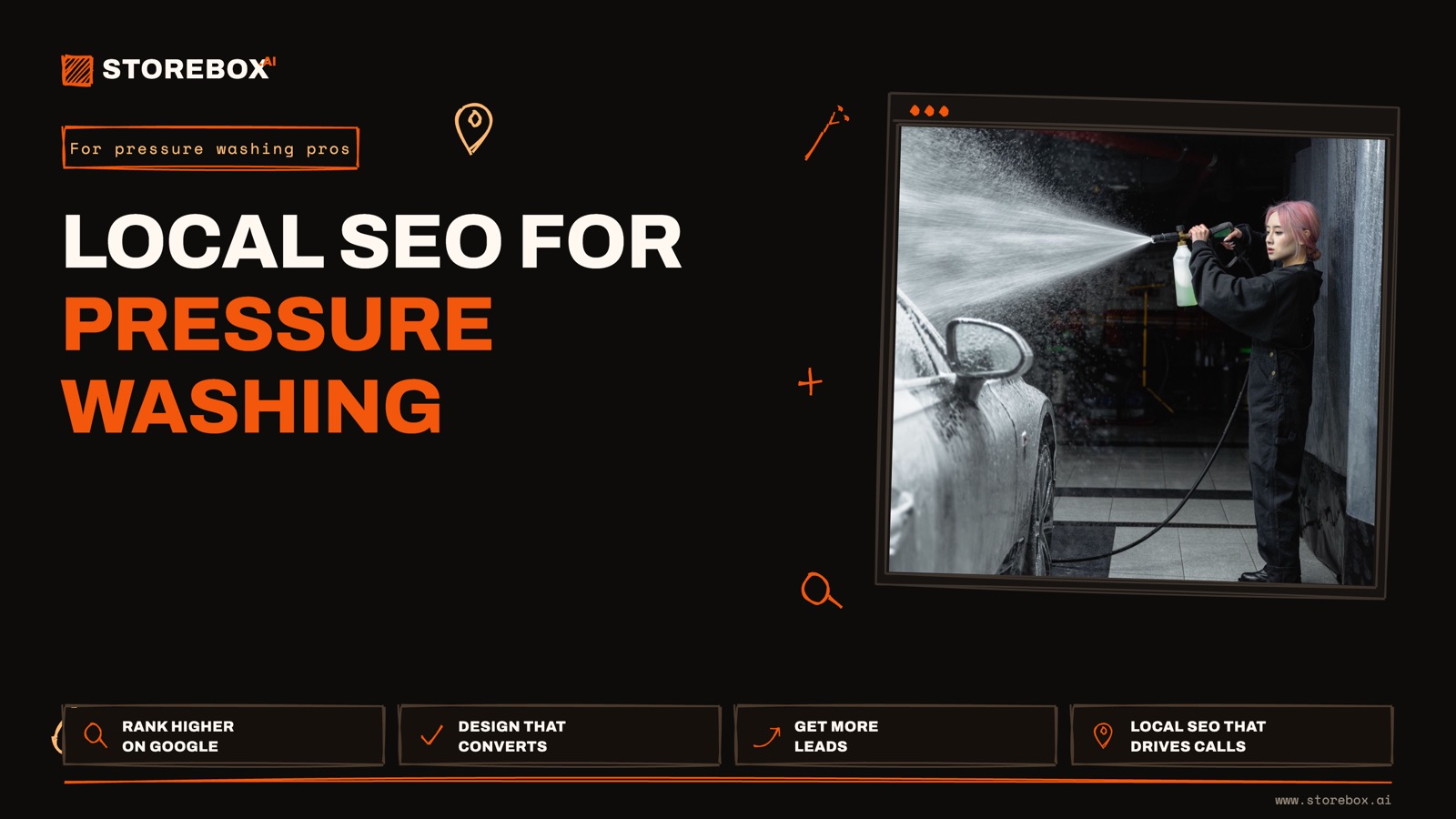
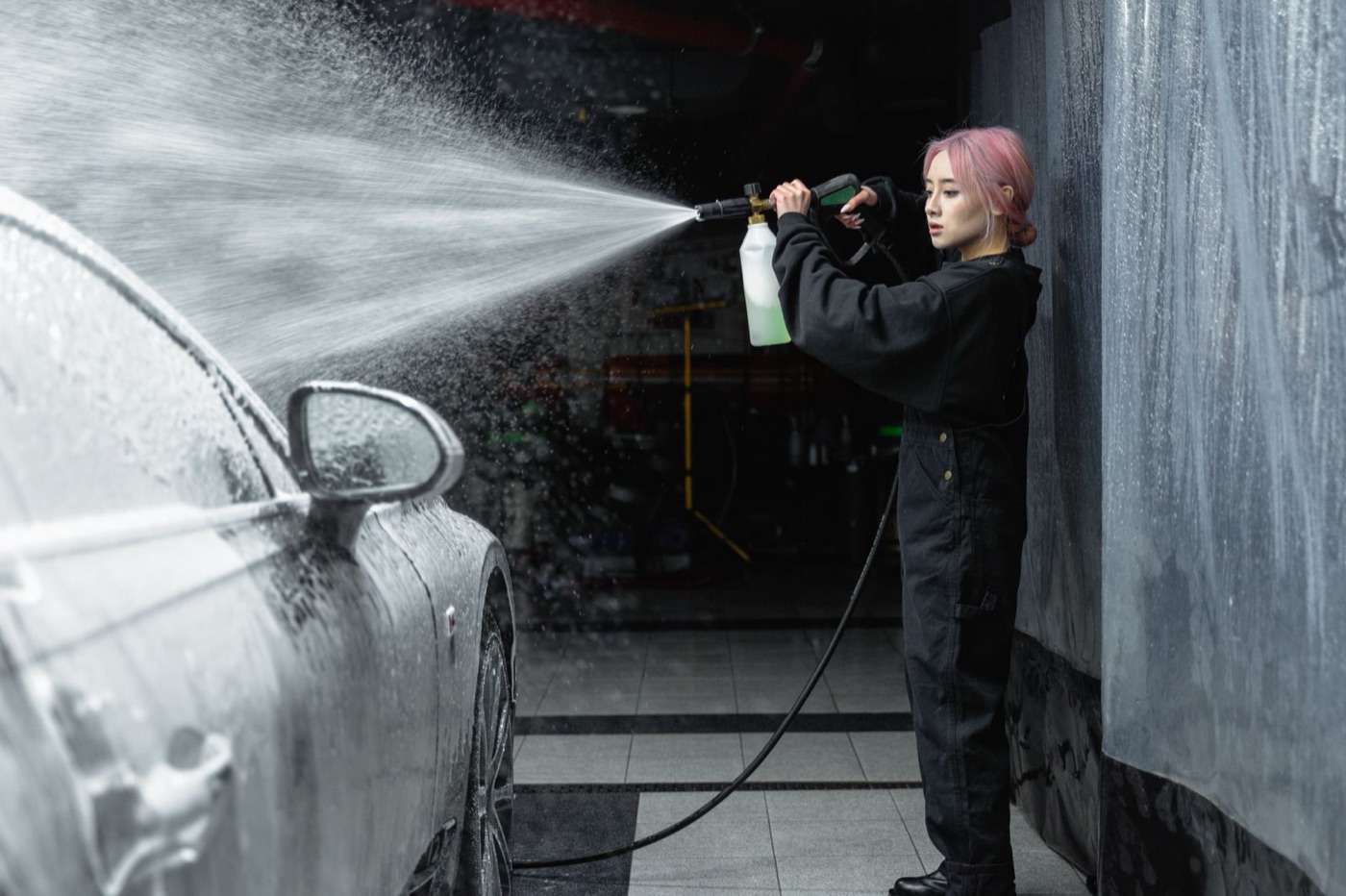
Here is the blunt version. Local SEO for pressure washing businesses is not a mystery and it is not expensive. It is four things done in order: a Google Business Profile set up correctly as a service-area business, a real page for every service and every town you drive to, a stack of before/after photos nobody else bothers to shoot, and a review engine that never stops. Do those four and you will show up in the local 3-pack for driveway cleaning, house washing, and roof soft wash in the ZIP codes you actually work. Skip them and you will keep buying $80 leads from a directory that also sold your job to three competitors.
The reason this works for washing specifically: your industry is wide open. IBISWorld counted 32,193 US pressure washing businesses in 2024, up 5.2% in a year, and the industry is so fragmented that no operator holds meaningful market share. Almost none of those trucks have a decent website. Most have a half-filled profile with eleven photos on it. That is your opening.
Key insights▼
- How does Google decide which pressure washing company shows in the local 3-pack?
- How should you set up your Google Business Profile when you drive to every job?
- Why are before/after photos the biggest edge a washing business has?
- What does local SEO for pressure washing businesses need on the website itself?
- Who is ranking for your keywords right now, and why can you beat them?
- How do you stay booked when the season turns?
- Frequently asked questions
How does Google decide which pressure washing company shows in the local 3-pack?
Google is explicit about this. Its Business Profile documentation says local results are based primarily on relevance, distance, and prominence, and that a combination of those three finds the best match for a search (Google Business Profile Help). Everything in this playbook is just moving one of those three levers. Stop thinking about "ranking on Google" and start thinking about which of the three you are weakest on.
Distance is the lever you cannot argue with
Google defines distance as how far each business is from the person searching. Even as a service-area business with a hidden address, your profile still has a real verification address behind it, and that pin is what Google measures from. Practical consequence: you will not win "pressure washing near me" for a homeowner 35 miles away, no matter how many reviews you have. So pick the 5 to 8 towns where your jobs actually cluster, build for those, and let the fringe be an upsell rather than a target. If your work is spread across two counties, the honest answer is that you need either a second verified location where you genuinely operate or a lot more prominence.
Relevance is mostly a data-entry job
Relevance is how well your profile matches the query. That is decided by your primary category, your secondary categories, your services list, your business description, and the content on your site. A profile filed under "Cleaning service" is fighting maid services for "driveway cleaning" queries and losing. A profile filed under "Pressure washing service" with roof cleaning and deck cleaning as secondaries is telling Google exactly what to match. This part is an afternoon of work and it is the highest return afternoon in the whole plan.
Prominence is the long game
Google describes prominence as how well known a business is, and says to increase mentions of your business in your local community and beyond. In practice that means review volume and velocity, consistent listings across the web, links from local sources — the chamber, the youth league you sponsor, the realtor who refers you, the local news piece about the historic downtown building you cleaned. It compounds slowly and it is the reason established competitors outrank you even when their profile is worse.
One more number worth internalizing: BrightLocal's study of Business Profile data found 84% of searches that surface a profile are discovery searches — category and service queries — versus 16% direct brand searches (BrightLocal). People are not looking for you. They are looking for someone who cleans roofs in their town. Your job is to be the obvious answer to that.
How should you set up your Google Business Profile when you drive to every job?
You are a service-area business (SAB) unless you have a storefront with permanent signage where customers show up. Google's own rule: if you do not serve customers at your business address, hide the address and list your service area instead (Google Business Profile Help). Hiding your home address is not a penalty and it is not a trick — it is the compliant setup. Leaving your home address public on a washing profile is what gets you suspended or reported by a competitor.
The mechanics you need to get right: you still supply a real address for verification, and it has to be a place your business genuinely operates — no PO boxes, no virtual offices. Then you add service areas. Google allows up to 20 service areas, and says the overall boundary should not be more than roughly 2 hours of driving time from your base (Google Business Profile Help). Do not max it out to look big. Twenty towns you never visit dilutes relevance and produces leads you have to turn down.
Get the categories right the first time
| Category | Use it as primary when | Or add as secondary |
|---|---|---|
| Pressure washing service | Washing is the core of your revenue — driveways, houses, decks, concrete | Always keep it listed |
| Roof cleaning service | Soft wash roof work is more than half your book | Yes, if you soft wash roofs at all |
| Deck builder / Deck cleaning | You also stain, seal, or repair decks | Yes, if you seal or stain |
| Gutter cleaning service | Gutters are a standalone service you sell and schedule | Yes, if you brighten or clean gutters |
| Commercial cleaning service | Fleet, storefront, and dumpster-pad contracts dominate | Yes, if you bid commercial |
| Window cleaning service | You run windows as a separate crew or add-on | Yes, if you offer it |
One primary, then only secondaries you can actually deliver. After categories, fill the Services list with the real names customers use — house washing, driveway cleaning, concrete cleaning, roof soft wash, deck cleaning, fence cleaning, gutter brightening, rust removal, oil stain removal, dumpster pad cleaning — and write a one- or two-sentence description under each. Then set real hours, turn on messaging only if you will answer it, and point the booking or website link at the matching page on your site rather than the homepage.
Your profile needs somewhere to send people. A $10 StoreBox site gives every service and every town its own real page — so your Business Profile links deep instead of dumping traffic on a homepage. Build your washing site for $10 →
Why are before/after photos the biggest edge a washing business has?
Because your product is visual and instant, and almost nobody in your industry treats photos like inventory. BrightLocal's Business Profile study found the median profile has 11 photos, while profiles carrying more than 100 images saw 520% more calls, 1,065% more website clicks, and 2,717% more direction requests than average (BrightLocal GMB Insights Study). Google itself lists adding photos and videos among its tips for improving local ranking (Google).
Be honest about what that data does and does not prove. Busy, established companies tend to have more photos, so some of that gap is the busy business causing the photos, not the reverse. Correlation, not a guaranteed 520%. But the practical read holds either way: photos are free, they are the thing a homeowner actually judges you on, and a profile with 200 real before/afters looks like a company that washes houses every day. A profile with a stock image of a wand and a rainbow does not.
Shoot the pair on every single job
- Same spot, same height, same framing for both shots. A before/after that does not line up reads as staged.
- Shoot the after once the surface has dried where you can — wet concrete looks clean even when it isn't, and homeowners know it.
- Get the money shots: half-cleaned driveway with the line down the middle, a black streak roof mid-soft-wash, mildew-green siding next to washed siding.
- Keep house numbers and license plates out of frame. Caption with the town instead: "Vinyl house wash, Overland Park."
- Google wants JPG or PNG between 10 KB and 5 MB, 720 x 720 pixels or better, and videos up to 30 seconds at 720p or higher (Google Business Profile Help). Your phone already clears all of that.
- Photos only appear after your profile is verified, and can take 24 to 48 hours to process — so upload weekly, not the night before a slow week.
Then use the same photos twice. Upload a batch to the Business Profile every week, and put the strongest pairs on the matching pages of your site: driveway shots on the driveway cleaning page, roof shots on the roof soft wash page, and a few from each town on that town's page. Write plain alt text describing the surface and the city. When you ask for a review, ask the customer to attach their own photo — customer photos are the one asset a competitor cannot copy.
Photos need a gallery, not a Facebook album. StoreBox builds a $10 site with per-service and per-city galleries, so the work you already photograph starts earning search traffic. Put your before/afters to work →
What does local SEO for pressure washing businesses need on the website itself?
A five-page brochure site will not do it. You need three page types: one page per service, one page per service-plus-city combination that matters, and proof pages. The reason is relevance. When someone in Frisco searches "roof soft wash Frisco," Google is looking for a page that is genuinely about roof soft washing in Frisco. A homepage that lists nine services and three counties is about nothing in particular.
| Page type | Example URL | What has to be on it |
|---|---|---|
| Service page | /driveway-cleaning | Process, surfaces, price range, 6-10 before/afters, FAQs, quote form |
| Service page | /roof-soft-wash | Why soft wash not pressure, shingle safety, algae explanation, warranty note |
| Service + city page | /house-washing-overland-park | Local jobs, local reviews, neighborhoods served, siding types common there |
| Commercial page | /commercial-pressure-washing | Dumpster pads, storefronts, fleet, sidewalks, insurance and COI, net terms |
| Proof page | /gallery or /reviews | Every before/after, embedded Google reviews, license and insurance |
| Service area hub | /service-areas | Links to each city page, honest radius, no towns you won't drive to |
The trap here is thin duplicate pages. Ten city pages with the town name swapped and nothing else changed is a well-known way to get all ten ignored. Each city page needs at least one thing that only exists there: a real job you did, a real review from that town, the siding or roof type that dominates the housing stock, the HOA rule about annual washing, the local water restriction. If you cannot write 400 honest words about working in a town, you do not need a page for that town yet.
On-page basics that still move the needle
- Title tag pattern that names the service and the city: "Driveway Cleaning in Overland Park, KS | [Company]".
- One H1 per page, matching the search intent, in plain language.
- Phone number as a click-to-call link in the header on mobile, not an image.
- Identical name, address, and phone in the footer of every page, matching your Business Profile character for character.
- A quote form above the fold with three fields, plus text-me as an option — washing buyers are shopping fast.
- Fast and mobile-first. Most of your traffic is a homeowner standing in the driveway looking at the stains.
NAP consistency and schema markup
NAP consistency is unglamorous and it matters. Pick one exact format for your business name, phone, and city, and use it identically on your site, your Business Profile, Yelp, Angi, Nextdoor, your invoices, and your truck. Conflicting phone numbers across the web is one of the quieter reasons a profile stalls. For schema, add LocalBusiness structured data using the most specific type that fits, with your areaServed, hours, and phone. Fair warning: schema is not a local ranking factor and will not lift you into the 3-pack by itself. It helps Google parse the facts and makes you eligible for richer results. Add it, then move on.
Service pages and city pages, without an agency invoice. StoreBox spins up the whole page structure above for $10 — service pages, city pages, gallery, quote form. Start your $10 site →
Who is ranking for your keywords right now, and why can you beat them?
Search "pressure washing [your town]" and look at what is actually on page one. It is usually the same five things, and four of them are beatable by an owner with a phone and a decent site.
- Lead-gen directories — Angi, Thumbtack, Yelp, Porch. They rank on domain strength, not on knowing anything about your town. Their pages are lists of companies with stock copy. They cannot show a before/after of the specific brick ranch on Maple Street.
- National franchise location pages — templated, identical across hundreds of markets, thin on local proof. They win on brand prominence and lose on relevance the moment you publish real local content.
- Generic agency blog posts — "Pressure washing SEO tips" written by marketers who have never held a surface cleaner. They rank for informational queries, not for the buying query, and they do not compete with you for the job.
- Reddit and forum threads — r/pressurewashing arguments about downstreaming and SH ratios. Great for research, useless to a homeowner who wants a quote Tuesday.
- Supplier and equipment blogs — soft wash chemical distributors ranking for technique terms. Same story: no local intent, no competition for the sale.
The one competitor you should respect is the local operator with 300 reviews and eight years of prominence. You are not going to pass them this quarter. What you can do is take the queries they neglect. Established washers usually have a strong profile and a weak website — one page, no service pages, no city pages, twelve photos. Every long-tail query they ignore is yours: roof soft wash in a specific suburb, rust removal from concrete, oil stain removal, dumpster pad cleaning, HOA fence washing, paver sealing prep.
Structural advantage worth naming: this industry is fragmented, with no player holding meaningful share and the business count still climbing (IBISWorld). There is no dominant brand to unseat. There is a field of small operators, most of whom do not do any of this. If you want the wider funnel — where local SEO ends and referrals, door hangers, and repeat commercial work begin — that is covered in how to get more pressure washing jobs. And if your profile exists but nothing shows in search, work through why your business isn't showing up on Google before you spend a dollar on ads.
How do you stay booked when the season turns?
Washing demand is brutally seasonal. Pull "pressure washing" up in Google Trends for the US and you will see the same shape every year: interest climbs from February, peaks in spring, holds through early summer, and falls off a cliff after October. That pattern dictates the SEO calendar, because rankings take months to arrive. Publishing your driveway cleaning page in April is publishing it too late. You build in the off-season and harvest in the spring.
| Season | SEO and profile work | What you sell |
|---|---|---|
| Nov - Jan (slow) | Build service and city pages, fix NAP, write FAQs, upload the year's photo backlog | Commercial contracts, gutter cleaning, holiday-light installs, prepaid spring bookings |
| Feb - Mar (ramp) | Weekly Google Posts, spring offer on profile, push reviews from last fall | Early-bird house washing, pollen prep, HOA annual contracts |
| Apr - Jul (peak) | Photos and reviews only — you have no time for anything else | Everything. Raise prices. |
| Aug - Oct (taper) | Audit what ranked, add pages for the queries you lost, refresh city pages | Deck and fence cleaning, sealing, pre-holiday washes, commercial bids for next year |
Two things carry you through winter. First, commercial: dumpster pads, storefronts, drive-thrus, and fleet washing are recurring and far less weather-dependent than residential, and they are searched year-round by facility managers who need an invoice and a COI. Give commercial its own page with insurance limits and net terms spelled out. Second, reviews. Because 74% of consumers only trust reviews from the last three months (BrightLocal, 2026), a winter with zero new reviews means you enter March looking stale to the exact buyers who set your year. Ask every off-season customer, and answer every review — 89% of consumers expect owners to respond, and 80% are more likely to use a business that replies to all of them.
The same seasonal logic applies to any local trade, and the general framework is laid out in local SEO for small business: the complete guide. The washing-specific twist is just that your window is narrower and your photos are better.
The slow season is when you build. Get your service and city pages live this winter for $10 so they're ranked and pulling quotes by the spring rush. Build it before spring — $10 →
Frequently asked questions
Should I hide my home address on my pressure washing Google Business Profile?+
What primary category should a pressure washing business use?+
How many reviews does a pressure washing company need to rank?+
Do city pages actually work, or will Google see them as duplicate content?+
How many photos should I put on my Google Business Profile?+
Own five towns, not the whole state
Local SEO for a pressure washing business comes down to being unmistakably the most relevant, most photographed, most recently reviewed washer in the specific towns you drive to. Fix the categories this week. Hide the address and set honest service areas. Upload the photo backlog sitting on your phone. Ask every customer for a review and answer all of them. Then give each service and each town a real page to land on — that last part is what StoreBox does for $10, no agency retainer and no six-month build.
Build your StoreBox site — $10Sources
- Google Business Profile Help — Tips to improve your local ranking on Google (Local results are based primarily on relevance, distance, and prominence; photos, reviews, categories and complete info listed as ranking tips) — https://support.google.com/business/answer/7091?hl=en
- Google Business Profile Help — Manage your business address (Businesses that don't serve customers at their address should hide it and list a service area instead; no PO boxes or virtual offices) — https://support.google.com/business/answer/2853879?hl=en
- Google Business Profile Help — Manage your service areas for service-area & hybrid businesses (Up to 20 service areas; overall boundary should not exceed about 2 hours of driving time from your base) — https://support.google.com/business/answer/9157481?hl=en
- Google Business Profile Help — Manage your Business Profile photos & videos (Photo specs (JPG/PNG, 10 KB to 5 MB, 720 x 720 recommended), 30-second video limit, verification requirement and 24-48 hour processing) — https://support.google.com/business/answer/6103862?hl=en
- BrightLocal — Local Consumer Review Survey 2026 (41% always read reviews, 68% require 4+ stars, 31% require 4.5+, 74% want reviews from the last 3 months, 89% expect owner responses, 85% more likely after positive reviews; 1,002 US adults) — https://www.brightlocal.com/research/local-consumer-review-survey/
- BrightLocal — Google My Business Insights Study (Median profile has 11 photos; profiles with 100+ photos see 520% more calls, 1,065% more website clicks, 2,717% more direction requests; 84% of searches are discovery searches) — https://www.brightlocal.com/research/google-my-business-insights-study/
- IBISWorld — Pressure Washing Services in the US - Number of Businesses (32,193 US pressure washing businesses as of 2024, up 5.2% from 2023; highly fragmented industry) — https://www.ibisworld.com/united-states/number-of-businesses/pressure-washing-services/6538/
- Google Search Central — Local Business (LocalBusiness) structured data (Requirements for LocalBusiness markup and the recommendation to use the most specific subtype; markup drives eligibility for rich results, not local rankings) — https://developers.google.com/search/docs/appearance/structured-data/local-business
- Google Trends — US search interest for "pressure washing", 5-year view (Seasonal shape: interest climbs from February, peaks in spring, falls off after October) — https://trends.google.com/trends/explore?date=today%205-y&geo=US&q=pressure%20washing