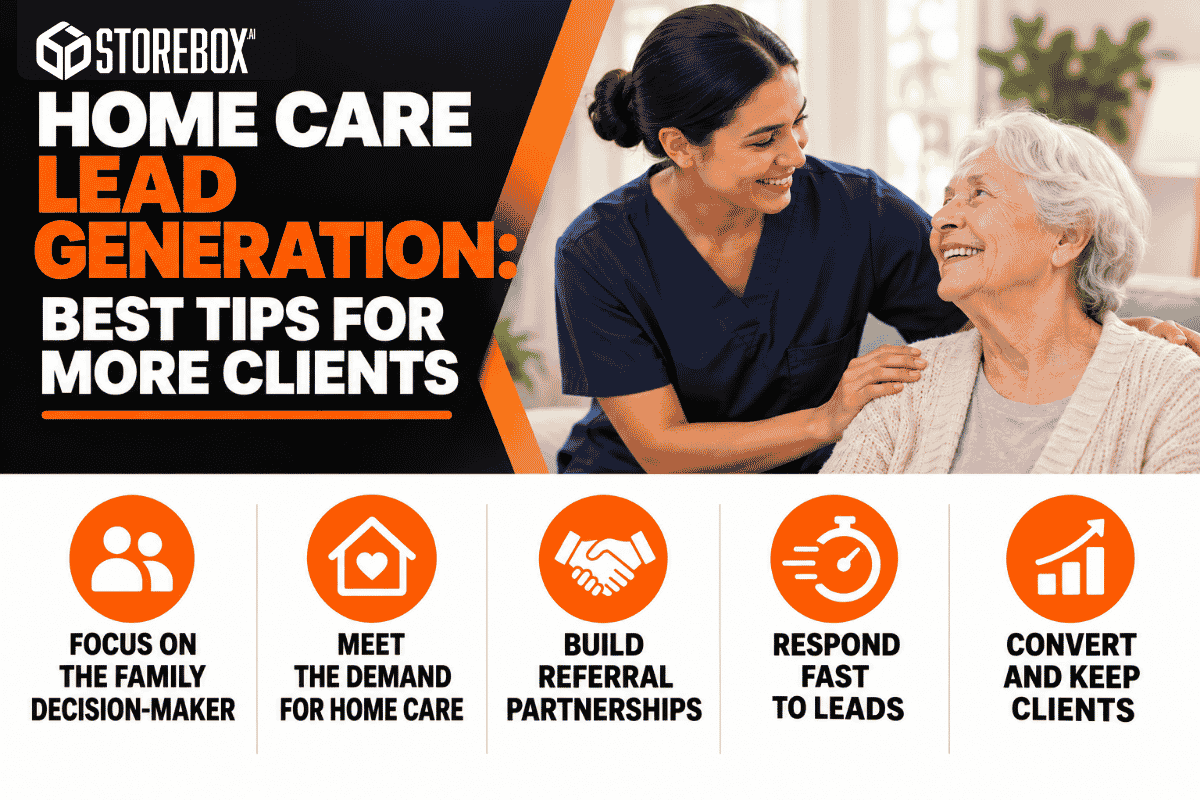
Key Insights
Home care lead generation: who buys, where clients come from, and how to answer first.
Expand key insights
- The buyer is usually a family member, not the person receiving care. AARP and the National Alliance for Caregiving count 63 million family caregivers, nearly one in four adults, and their average age is 51, so pages and calls should speak to the adult child.
- Demand points toward home-based care. AARP found 75 percent of adults 50 and older want to stay in their current homes for as long as possible.
- Non-medical home care is mostly private pay. Medicare does not pay for personal care when it is the only care needed, or for homemaker services unrelated to a care plan.
- A client is worth far more than a lead. Genworth's 2024 survey put the annual median for homemaker services at $75,504, so even a pricey lead pays back if you convert and keep the client.
- Hospital discharge lists don't include non-medical agencies by default. Federal rules require the list to name Medicare-participating home health agencies, so hospital referrals to private-pay agencies depend on relationships.
- Speed decides conversion. A widely cited Harvard Business Review study found that firms contacting a lead within an hour were nearly seven times as likely to qualify it as firms waiting one more hour, which makes a one-business-day reply standard too slow.
- Local referral networks are large. The Eldercare Locator refers callers to more than 600 Area Agencies on Aging and handles about 400,000 requests a year.
Home Care Lead Generation at a Glance
Home care lead generation is less about finding people who need care and more about being the agency a worried family finds first and trusts fastest. Demand is not the shortage: 63 million Americans are family caregivers, and 75 percent of adults 50 and older want to stay in their current homes. What varies is where home care leads come from, who pays, and how quickly an agency answers, which is why home care lead generation works best as a system, not a single channel.
63M
family caregivers in the US, per AARP
51
average age of a family caregiver
75%
of adults 50+ want to stay in their homes
$75,504
2024 median a year for homemaker services, per Genworth
This guide covers home care lead generation for private pay and referral clients: who buys, which sources to try first, how referral sources like hospital discharge planners and Area Agencies on Aging work, how to judge paid leads, and how to follow up so an inquiry becomes a client. Strong home care lead generation also depends on speed, since the first agency to reach a worried family usually gets the conversation.
Which Home Care Lead Source Should You Pick First?
The right first source depends on your referral network and how fast you need clients. A new agency with no network should build its online presence first, and an agency with strong clinical relationships should start with referral partners. The table gives our verdict for each situation and the limit that most often defeats it.
| Your situation | Pick this first | What defeats it |
|---|---|---|
| New agency, no referral network | Google profile, reviews, and a page for each service | It takes months to build, as our local SEO timeline guide explains |
| Need clients this month | Paid search or a lead marketplace, with tracking | Shared leads and a weak follow-up process |
| Strong clinical relationships | Discharge planners, social workers, and physician offices | Relationships take time, and you need staff ready to start fast |
| Want higher-value private-pay clients | Elder law attorneys, financial planners, and Area Agencies on Aging | Slow, trust-based, and hard to scale |
| Getting inquiries but losing them | A response and follow-up system | Slow answers and no second contact |
These verdicts reflect how each source is paid and staffed, not a ranking study.
Who Pays: Private Pay and Why It Shapes Your Message
Because Medicare does not cover custodial care or homemaker services on their own, most non-medical clients pay out of pocket or through long-term care insurance. That changes the message. Families need to understand cost early, so explain how your pricing works and what a typical week of care looks like. Genworth found the 2024 national median annual cost for homemaker services was $75,504, which works out to about $33 an hour at 44 hours a week by our arithmetic.
That figure makes lead economics unusual. A client who needs 20 hours a week at $33 would bill about $34,320 a year, our arithmetic and revenue, not profit. The grid shows cost per client at hypothetical lead prices and close rates.
| Lead price | Closing 5% of leads | Closing 10% | Closing 20% |
|---|---|---|---|
| $40 | $800 per client | $400 | $200 |
| $80 | $1,600 | $800 | $400 |
| $150 | $3,000 | $1,500 | $750 |
Even the worst cell, $3,000, is under 9 percent of $34,320 in first-year billings. The lead prices are made up, so run your own numbers. The lesson is that conversion and retention move your results more than the lead price does. Our appliance repair leads guide explains the cost-per-job method behind this.
Home Care Referral Sources and How to Win Them
| Source | Why they refer | What they need from you |
|---|---|---|
| Hospital discharge planners and social workers | The federal discharge list names Medicare-participating agencies, so planners refer private-pay options informally | A one-page profile, proof of licensing and insurance, and a same-day answer |
| Area Agencies on Aging | The Eldercare Locator refers callers to more than 600 agencies, including for home and community-based services | An accurate listing with your services and areas |
| Elder law attorneys and financial planners | Clients ask how to pay for care | Clear private-pay pricing guidance |
| Geriatric care managers and physician offices | They coordinate care plans | Reliable staffing and fast updates |
| Past clients' families | They have already trusted you | A review and referral request |
The first row is the one most owners misread. The discharge rule requires a list of Medicare-participating home health agencies and says hospitals must respect patient choice, so a private-pay agency isn't on the list by default. The federal rule is regulation, and the rest of the table is our read.
Visit planners in person, leave a packet, and report back on every referral so they keep sending families your way.
Buying Home Care Leads: What to Ask First
Vendors that sell home care leads promise exclusivity, and platforms sell the same inquiry to several agencies. Before paying, ask four questions:
Does each lead go to one agency?
Exclusive leads are worth more than inquiries sold to several agencies at once.
How are inquiries verified?
Ask how the vendor confirms a real family with a real need.
Do you get call recordings?
Recordings let you check lead quality yourself.
What credit do you get for bad leads?
Get the policy in writing before you pay.
Start small and track every lead to a signed client. Our Angi and HomeAdvisor comparison covers shared-lead economics, and our marketing agency pricing guide covers hiring help.
Follow-Up: The Part That Turns Inquiries into Clients
of companies replied to a web inquiry within an hour, per HBR
A Harvard Business Review analysis of 2,241 US companies found only 37 percent replied to a web inquiry within an hour, and firms that reached a lead within that hour were nearly seven times as likely to qualify it.
The study covered general sales, not home care, and dates from 2011, but the direction fits an urgent purchase. Some home care marketing guides tell agencies to reply within one business day. For a family dealing with a hospital discharge, that is too slow.
| Window | What to do |
|---|---|
| Within the hour | A person calls or texts back, and answers by name |
| Same day | Send a short email with pricing guidance and next steps |
| Day 2 to 3 | Follow up by phone once more |
| Week 2 | Send a helpful note, such as a care planning checklist |
Our email marketing guide covers the legal basics for follow-up email, and the same rules apply to a care agency.
Your Website and Local Presence
Build a page for each service you offer and a page for each area you serve.
Personal care
Bathing, dressing and daily routines, described for the family member reading.
Companion and respite care
Company for the parent and a break for the family caregiver.
Dementia care
Training, caregiver matching and how you keep the family informed.
Post-hospital support
How fast you can start after a discharge.
Overnight care
What a night shift covers and how it is staffed.
A page for each area you serve
Real details about each city or county, not swapped place names.
Keep inquiry forms to contact details and a short description of the need. Ask your compliance advisor whether HIPAA applies to you before collecting health details online.
Our local SEO checklist, Google Business Profile audit checklist, and guide to SEO for doctors cover the setup. For sibling health lead guides, see therapy clients and physical therapy patients.
How AI Features Find Home Care Agencies
Families increasingly ask assistants who can help with an aging parent, and each surface reads different material.
| Surface | What it reads | What you control |
|---|---|---|
| Google AI Overviews and AI Mode | Indexed pages and business details | A snippet-eligible page and a complete profile |
| Copilot | Bing listings and Bing Places data | A Bing Places listing |
| ChatGPT and Perplexity | Crawled websites | Plain-text service pages and open search crawlers |
Google's guide says a page must be indexed and eligible to show a snippet, with no special markup required, and that Business Profiles can help services appear in AI responses. Claim a Bing Places listing, and keep service pages in plain text so assistants can quote them. Our guides on how to show up in AI results, making your website visible to AI, and answer engine optimization explain each step.
Seven Tips for Home Care Lead Generation: How to Get More Home Care Clients
These seven tips turn the research above into habits you can start this week. Each one has a reason, concrete steps, and a mistake to avoid.
1. Write your home care lead generation pages for the adult child
The person typing is often a family caregiver around 51 years old, and 29 percent are part of the sandwich generation raising children while caring for an adult. They are stressed, short on time, and comparing agencies on a phone.
What to put at the top of every page
Open with the family's situation, such as a parent coming home from the hospital or a spouse who can no longer be left alone. Then give one clear next step: a phone number and a short form. Save industry terms like "activities of daily living" for the second paragraph.
Pages that capture senior care and non medical home care leads
Build a page for each service families ask for: personal care, companion care, respite care for family caregivers, dementia care, post-hospital support, and overnight care. Add a page for each city or county you serve, with real details about that area. These pages capture the searches behind senior care lead generation, such as "home care for my mother" and "respite care near me," and they give every inquiry a relevant landing spot.
A common mistake
Writing only for seniors. The person who calls first is usually a daughter, son, or spouse, so speak to them directly.
2. Answer home care leads within the hour
Only 37 percent of the 2,241 companies in the Harvard Business Review audit replied to a web inquiry within an hour, so a fast reply is a real advantage. The study covered general sales, but a family arranging care after a hospital stay is an urgent buyer.
Set up coverage before you buy leads
Decide who answers during business hours, who covers evenings, and what happens on weekends. A Friday evening inquiry answered on Monday has waited longer than 24 hours, the slowest bracket in the HBR analysis, where firms that reached a lead within an hour were more than 60 times as likely to qualify it.
A first-call script
Keep it short: "Hi, this is [name] from [agency]. I'm sorry you're dealing with this. Can you tell me who needs care and when you'd like to start?" Then listen. If you offer an in-home assessment, book it on the same call.
When you can't answer live
Send a text within minutes that confirms you received the message, names a time you will call, and includes a direct number. Then call at that time, every time.
3. Explain pricing to win private pay home care clients
Because Medicare does not pay for custodial or personal care when it is the only care needed, most private pay home care clients use savings, family funds, or a long-term care policy. They want to know the cost before they commit. Genworth's 2024 median for homemaker services was $75,504 a year, and two-thirds of agencies charge the same rate for homemaker and aide services.
What to publish
Explain how you bill, such as hourly rates, minimum visit length, any assessment fee, and what each visit includes. If your rate depends on hours and level of care, say so and explain how you confirm it. Never publish a number you can't keep.
How to explain cost on the phone
Lead with the family's need, then the price. For example: "For 20 hours a week of companion and personal care, here is how the weekly cost works." Send a written estimate by email the same day. Our free estimate template gives you a clean format.
Answer the Medicare question before families ask
Add a short FAQ to your pricing page: Medicare covers qualifying skilled home health but not custodial care on its own. Then explain how families usually pay, and ask whether the family holds a long-term care insurance policy.
4. Build relationships with home care referral sources
The federal discharge rule requires hospitals to list Medicare-participating home health agencies, so private-pay agencies earn referrals through relationships. The home care referral sources worth working include discharge planners, Area Agencies on Aging, elder law attorneys, geriatric care managers, and physician offices.
What goes in the referral packet
One page with your services, areas served, hours, licensing and insurance, how fast you can start care, and a direct phone number. Add a line explaining how you report back on every referral.
Who to visit first
Start with the hospitals and rehabilitation centers nearest you and your local Area Agency on Aging, which you can find through the Eldercare Locator. Ask each what they need when a family can't find help at 4 p.m. on a Friday, then build your process around the answer.
How to report back
Tell the referrer within a day that you reached the family, whether an assessment is booked, and whether care started. Keep health details out of the message and ask your compliance advisor what you may share. Referrers send more families when they see the loop close.
5. Add a memory care page for memory care lead generation
27 percent of family caregivers care for someone with dementia or cognitive impairment, and these families search for specialized help. A dedicated page also supports memory care lead generation without diluting your general pages.
What to cover on the page
Describe your caregiver training, how you match a caregiver to a client, how you handle wandering, evening confusion, and changes in routine, and how you keep the family informed. Claim a certification only if you hold it.
Questions families ask
Answer these in plain text: How do you match caregivers to someone with dementia? What training do they have? What happens if my parent refuses care? How will you update us? Can we start with a few hours a week? Plain-text answers help search engines and AI assistants quote your page.
6. Turn families into reviews and referrals
Families research agencies before they call, so reviews and word of mouth do much of the convincing. This is one of the cheapest ways to get more home care clients.
Who to ask and when
Ask the family member who coordinated care, after a milestone such as the first month or a smooth return from the hospital, not after a rough week. Ask in person or by phone first, then text the review link.
What to suggest they mention
The type of care, the town, and what made them comfortable. Specific reviews help future families and match how people search. Keep your profile complete, as our Google Business Profile optimization guide explains.
Referral requests
Ask whether the family knows another household facing the same decision. If you serve any Medicare or Medicaid clients, check with a compliance advisor before offering any reward for referrals.
7. Track every inquiry from source to signed client
Without tracking, you can't tell which in home care leads become clients. The cost-per-client grid above only helps if you know your own close rate.
What to record
For every inquiry, log the source, such as Google, a named referral partner, or a paid vendor, plus the time received, the time of first contact, whether an assessment was booked, the start date, and the weekly hours.
How to compare home care agency leads by source
Each month, calculate cost per signed client and time to first contact for every source. Compare the average weekly hours each source produces, since a client at 30 hours a week is worth more than one at 8.
Decide where to spend
Move budget toward sources with the lowest cost per signed client and the highest weekly hours, and cut sources that send inquiries but no clients. Our small business marketing playbook covers building this habit.
How Storebox Helps Home Care Agencies Get Found and Answered

Storebox builds and manages websites for local service businesses, including the service pages, fast inquiry replies and review requests this guide describes. Starter is $100 a month. Growth is $500 a month and adds multi-team optimization, multiple locations, custom website development, and programmatic SEO with up to 500 new pages.
Starter plan
Get started.
$100 / month
Website and hosting included
- A new website, hosted and edited for you, or integrated with your current one
- Blog writing & content, done for you (up to 30 pieces in your calendar)
- Keyword research & competitor analysis
- SEO: aimed at Google page 1
- AEO & GEO: aimed at ChatGPT, Gemini, Claude, Grok, Perplexity and Google AI Overviews
- AI assistant ready: your site structured so Meta Muse and other personal AI assistants can find and book you
- Google Business Profile optimization
- Every inquiry answered in seconds, on your website and WhatsApp, with CRM follow-ups
- Review and referral requests
- Monthly performance report
Frequently Asked Questions
How do home care agencies get leads?
How much do home care leads cost?
Are exclusive home care leads worth buying?
How do I get private pay home care clients?
How do I get home care referrals?
Does Medicare pay for home care?
Do I need a website for home care leads?
Sources
- AARP and the National Alliance for Caregiving, Caregiving in the US 2025 press release
- AARP, Caregiving in the US 2025 infographic (average age, dementia care)
- AARP, Why aging in place matters
- Medicare.gov, Home health services coverage
- Genworth and CareScout, 2024 Cost of Care Survey
- Electronic Code of Federal Regulations, 42 CFR 482.43 discharge planning
- USAging, Eldercare Locator
- Harvard Business Review, The Short Life of Online Sales Leads (2011)
- Google Search Central, Optimizing your website for generative AI features
Want a home care website that answers families first?
Service pages, instant inquiry replies, and review requests built for your agency, drafted free.
Get a Free Website Draft →